
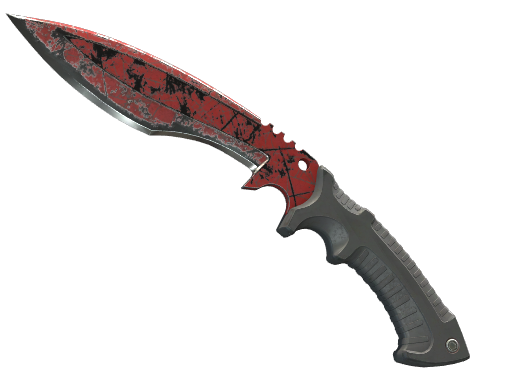


A Counter-Strike 2 skin listed for $100 on Steam might sell for around $85 on a third-party marketplace. To a buyer, that looks like a straightforward bargain: the same cosmetic item, delivered into the same Steam inventory, for 15% less. To a seller, accepting less money can also make sense, because $85 that can reach a bank account has a different value from $100 locked inside Steam.
That difference explains much of the price gap between the Steam Community Market and outside skin exchanges. Fees matter, but so do withdrawal options, competition, liquidity, and the risks attached to each transaction. What's less obvious is why Valve leaves room for this economy when it runs a marketplace of its own.
The answer requires separating what Valve's systems visibly permit from what outsiders can only infer about its business strategy. Valve supports item trading and sets the rules around it. That does not mean it endorses every marketplace built on top of those features, or that it has publicly explained why it tolerates any particular discount.
The "15% cheaper" claim is a useful shorthand, not a fixed rule
There is no universal rule that third-party skin prices sit exactly 15% below Steam. The difference varies by item, marketplace, payment method, and market conditions. Some skins trade close to their Steam price; others show substantially larger discounts.
Even comparing prices requires care. A Steam listing is an asking price, not proof that someone will pay it. The lowest outside listing may be unusually cheap, unavailable to buyers in certain countries, or subject to additional charges at checkout.
For CS2 skins, matching the item's name is not always enough, either. Wear, float value, pattern, finish phase, and applied stickers can affect what buyers will pay. A rare pattern or desirable sticker combination can turn two apparently identical skins into very different purchases.
A meaningful comparison therefore uses equivalent items, recent completed sales where available, and the total amount the buyer must actually spend. A headline discount can shrink once payment fees and currency conversion enter the calculation.
Still, outside marketplaces often do offer lower cash prices. The basic reason is that Steam and third-party exchanges sell access to the same items through different economic systems.
Steam balance and cash are different products
When you sell a skin on the Steam Community Market, the proceeds become Steam Wallet funds. Under Steam's normal system, those funds cannot be withdrawn to your bank account.
Steam balance is useful. You can spend it on games, eligible in-game purchases, and other products available through Steam. For someone who expects to make those purchases anyway, it may be worth close to its face value.
For someone trying to pay rent, reduce a collection, or leave skin trading entirely, its usefulness is much narrower.
A third-party marketplace may let that seller receive withdrawable money, subject to its supported payment methods, fees, identity checks, and regional restrictions. Sellers are consequently willing to accept a lower headline price in exchange for greater flexibility.
Imagine two offers: $100 in store credit or $85 in cash. Neither is automatically better for everyone. The store credit can appeal to a regular customer; the cash appeals to someone who wants to spend elsewhere.
That is the main reason for most skin-market discounts. The Steam price is denominated in a restricted spending balance, while an outside marketplace commonly quotes a cash price. Treating them as perfectly interchangeable makes the discount look more mysterious than it is.
Steam's fees create additional room for competitors
For CS2 items, Steam's published fee structure generally combines a 5% Steam transaction fee with a 10% game-specific fee. Minimum fees and rounding can affect the calculation, particularly for inexpensive items.
The important detail is how those percentages are applied. In a simplified example, if the seller receives $100, the buyer pays approximately $115. The $15 difference is 15% of the seller's proceeds, but roughly 13% of the buyer's total payment.
This is why "Steam takes 15% of the sale price" can be misleading unless the writer specifies what "sale price" means.
Outside marketplaces have their own fee structures. Some charge sellers a commission; some also charge for deposits, withdrawals, or particular payment methods. Their total cost can nevertheless be lower than Steam's transaction charges.
That creates room for a deal that benefits both sides. Suppose a Steam purchase would cost the buyer $115 and leave the seller with $100 in Steam Wallet funds. On an outside marketplace, the same item might sell for $100. If the seller's applicable commission were 5%, they would receive $95 before any further withdrawal costs.
The buyer spends $15 less, and the seller receives withdrawable proceeds instead of wallet credit. The outside marketplace earns its commission.
Those figures are illustrative, not a quote from a particular platform. They show why a lower listing price does not necessarily mean the seller is making an irrational sacrifice.
The fee gap and the cash-versus-wallet difference work together. Neither produces a permanent, mathematically guaranteed 15% discount.
Competition pushes outside prices down
Third-party marketplaces also compete with one another. Buyers can compare listings, and sellers can choose where to offer their inventory.
Platforms may compete through lower commissions, better withdrawal options, faster transactions, or tools that help collectors find specific floats and patterns. Professional traders also have an incentive to keep inventory moving. Accepting a smaller margin today can be preferable to holding a skin for weeks.
Steam has advantages of its own: familiarity, convenience, an integrated account system, and a large pool of users with existing wallet balances. A player who has just sold several items may buy another skin without ever considering an outside checkout.
That convenience can support a higher Steam price. External marketplaces must give users a reason to leave the familiar interface, and a lower cash price is one of their strongest selling points.
Liquidity matters as much as the advertised discount. A listing that remains unsold for a month does not establish what a seller can receive immediately. Instant-sale offers typically sacrifice price for speed, while patient listings may earn more.
Why traders cannot simply eliminate the gap
Whenever two markets price the same asset differently, an obvious question follows: why not buy cheaply outside Steam and resell at the higher Steam price?
Some traders do use price differences to acquire Steam balance at an effective discount. But that is not the same as completing a profitable cash-to-cash loop.
Buying a skin for $85 in cash and selling it for a higher nominal amount on Steam leaves the trader with wallet funds after fees. To turn those funds back into cash through skins, they would generally need to buy another item and sell it externally, where the cash discount appears again.
Fees, bid-ask spreads, price movements, and trading restrictions create further friction. Depending on the item and the applicable rules, holds or protections can also delay when it can be transferred or resold.
The price gap persists partly because money cannot move freely between the two systems at face value.
Valve permits trading, but that is not blanket approval
Third-party marketplaces exist because transferable items and Steam's trading infrastructure make external transactions possible. A marketplace can arrange payment outside Steam while using item transfers to deliver the purchase.
That technical possibility should not be confused with an unrestricted license from Valve. Outside services remain subject to applicable Steam terms and the constraints Valve places on accounts, trades, and access to its systems. Valve can change those constraints, and particular services or activities may face enforcement.
It is also important to distinguish a marketplace selling a specified item from a gambling service accepting skins as stakes. The fact that both use tradable items does not make their business models, or Valve's treatment of them, equivalent.
There is no basis for assuming that every surviving third-party platform has Valve's approval.
A valuable trading economy can benefit Valve indirectly
Valve's exact reasoning is not fully public, but there are plausible commercial reasons to preserve broad item transferability.
A skin that can later be traded or sold may be more attractive than a cosmetic permanently attached to an account. Buyers may feel more comfortable spending money when they believe the item retains some resale value, even though that value is neither guaranteed nor stable.
A large secondary market can also sustain interest in skins, collecting, and the game itself. That activity can support demand for Valve's own paid offerings and for transactions that do occur on the Steam Community Market.
Valve does not need to collect a fee on every external sale to receive indirect benefits from an active item economy. These are plausible economic incentives, not evidence of any disclosed Valve strategy.
Nor is every outside transaction necessarily a lost Steam sale. A seller who needs withdrawable cash may never have considered accepting Steam Wallet funds. Removing the outside option would not automatically redirect that transaction into Valve's marketplace.
Closing the gap would come with trade-offs
Valve could impose tighter restrictions on item transfers, but doing so would affect more than commercial marketplaces. Restrictions can also inconvenience collectors, friends exchanging items, and ordinary players moving through the trading ecosystem.
Making resale more difficult could reduce the appeal of holding expensive cosmetics. It could also undermine confidence in the flexibility users associate with tradable inventories.
That gives Valve a reason to weigh control against the usefulness of trading. At the same time, fraud, account theft, gambling-related concerns, and regulatory obligations can push toward stricter rules.
The resulting balance can change. An outside marketplace's business model depends partly on infrastructure and policies it does not control.
For players, the practical lesson is to compare the final transaction rather than the advertised percentage. Buyers should check the exact item, total payment cost, delivery process, and platform reputation. Sellers should compare net withdrawable proceeds, withdrawal eligibility, and expected sale time.
A 15% discount can be entirely legitimate without being universal or risk-free. It often reflects the different value of cash and Steam Wallet funds, combined with lower fees and stronger price competition. Valve leaves room for that difference by maintaining a tradable item ecosystem, one whose broader value may outweigh the benefit of trying to capture every individual sale.
