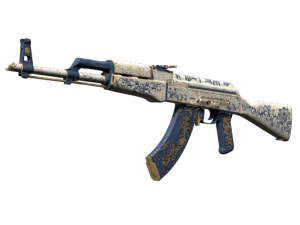
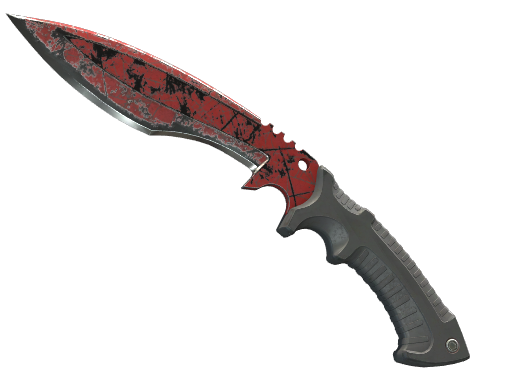
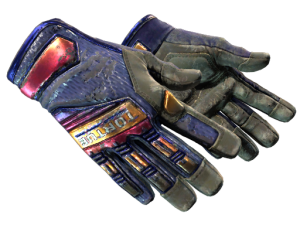

Every experienced CS2 trader eventually hears the same piece of advice, passed around Discord servers and Reddit threads: "Trade up, trade smart, swap evenly and you'll never lose." I've heard it a hundred times. It sounds reasonable. If two skins have roughly the same price tag on the Steam Community Market, swapping one for the other should be a wash. No harm, no foul, just a change of cosmetics. In practice, almost every even swap drains a small but real amount of value from your inventory. Dozens or hundreds of these "free" exchanges compound into a meaningful loss. The reason has less to do with market crashes or scams and more to do with a structural feature of skin marketplaces that most players never consciously notice: the hidden spread.
What "spread" actually means in skin trading
In financial markets, the spread is the gap between the highest price a buyer will pay (the bid) and the lowest price a seller will accept (the ask). If Apple stock is bid at $190.00 and asked at $190.10, the spread is ten cents. Buy at the ask, sell at the bid, and you lose that ten cents on every round trip, even if the underlying asset hasn't moved at all.
CS2 skin markets work on the same principle, except the spread is often much wider in percentage terms and completely invisible to the casual trader. Open the Steam Community Market page for a skin and you see a column of sell orders sorted cheapest to most expensive, and a column of buy orders sorted highest to lowest. The gap between the cheapest sell order and the highest buy order is the live spread. It can be a few cents on a $1.50 consumer-grade skin or several dollars on a rare Covert or StatTrak piece.
Here's the part most people skip. Those two prices, the best bid and the best ask, aren't just different numbers on a screen. They're two different transaction prices. If you "own" a skin at its listed sell-order value and trade it for another skin at its listed sell-order value, you're effectively buying both assets at the ask. To actually turn either into cash, you'd have to sell into the bid. That's where the hidden spread takes its bite.
The Steam Community Market fee: a spread you can't escape
Before we even get to the bid-ask gap between individual orders, there's a flat, unavoidable markup built into every Steam Community Market transaction. Valve takes a minimum 5 percent marketplace fee on every sale (sometimes a bit more depending on the game or item category), plus a separate game-specific fee. For CS2 items, the combined cut is roughly 13 to 15 percent of the final sale price.
That fee has a direct consequence for swapping. Imagine two players agree to trade a skin with a listed market value of $100 for another skin listed at $100. Both feel they made an even exchange. But if either player later cashes out through the Steam Market, they get about $85 after fees, not $100. If the trade was truly even in "real value" terms, both players just lost the fee spread at the same time. Nobody gained. The platform did.
Now think about that same even swap happening ten times across different items in a trading session. Each swap may look value-neutral at the listing price, but every future sale is wearing a 13 to 15 percent haircut. The skin that never trades never gets taxed. The skin that changes hands five times before being sold only gets taxed once at the end, but the opportunity cost of moving assets through spreads and fees over and over erodes value in a way that a simple inventory view will never show you.
The bid-ask spread on individual skins
Even setting the platform fee aside, every individual skin carries its own bid-ask spread, and this is where it gets ugly. The spread isn't a constant. It varies wildly from skin to skin, driven by supply, demand, liquidity and who actually trades the item.
Take a popular, liquid skin like an AK-47 | Redline (Field-Tested). The sell orders and buy orders on the Steam Market for this thing might be separated by only 20 to 40 cents on a $4.50 price. That's a tight spread, roughly 5 to 9 percent. High-volume items with thousands of listings get competitive pricing, which keeps the spread narrow.
Now compare that to an AWP | Hyper Beast (Minimal Wear) or a StatTrak variant of some less popular Covert skin. The item might show a "market price" of $35 on the price-tracking sites, but look at the actual order book and the highest buy order might be $28 with the lowest sell order at $35. That's a $7 spread, about 20 percent. The listed value makes it look like a fair swap partner for another $35 skin. Its realizable value is much lower.
When you swap one skin for another based on listed or median prices, you're almost always ignoring the bid side of each order book. The skin you're giving up might have a tight spread and a realizable value close to its listed price. The skin you're getting might have a wide spread and a realizable value well below its listed price. In that case the swap isn't even. It's a quiet loss dressed up as a fair trade.
Median price versus realizable price
A lot of traders and pricing tools value skins using "median sale price" or "average sale price" over some time window. That's useful for broad market analysis and misleading for individual transactions. The median reflects the midpoint of past sales, not what you can actually get today.
A skin might have a 30-day median of $50 because it sold at $48, $52, and $50 last month. But those sales might be spread over weeks. Today the active order book might show the highest buy order at $42 and the lowest sell order at $52. Swap your skin for this one and you're effectively acquiring a $42 asset while giving up a $50 asset. That's an $8 loss hidden behind a "fair" median comparison.
The distortion gets worse with third-party trading bots and automated swap platforms. Many of them price items from cached median values pulled off the Steam API. They don't account for real-time order book depth or spread width. A bot facilitating an "even swap" at median prices is shifting value from one side of the trade to the other, depending on which skin has the wider spread.
Third-party marketplace spreads and fees
None of this is unique to the Steam Community Market. Third-party marketplaces like Buff163, Skinport, DMarket, Bitskins and others each have their own fee structures and order book dynamics. And here it gets more complicated, because spreads differ across platforms for the same skin.
A skin with a tight spread on Buff163 (a Chinese-dominated marketplace with enormous trading volume) might have a much wider spread on a Western platform with lower liquidity. Buy on one platform and sell on another, or trade based on one platform's prices while your counterparty values the skin using another platform's data, and you've introduced cross-platform spread risk into the equation.
Some traders try to exploit these differences through arbitrage. But arbitrage has its own spreads and fees. A skin bought on Buff at the ask and sold on Skinport at the bid might show a nominal $5 profit on paper. Factor in the bid-ask spread on both platforms, the platform fees on the selling side and any currency conversion costs, and that $5 might shrink to $1 or vanish.
For the average player doing casual swaps, cross-platform spreads rarely come up. But it's another layer of hidden cost on every transaction, especially when trading partners cite prices from different sources.
Float value and pattern premiums: the invisible spread inside the spread
The listed market price for a skin is an average across all copies in a given wear condition. But CS2 skins aren't fungible commodities. Each individual instance has a unique float value, and some have pattern indices that create visible aesthetic differences.
A Factory New skin might have a float anywhere from 0.00 to 0.07. Within that range, visual quality varies. A 0.00x float skin is visibly cleaner than a 0.069 float skin, and experienced traders know it. Some skins also carry pattern premiums. A specific AK-47 | Case Hardened blue gem pattern can be worth many times the base price.
When two players swap based on condition averages, they may not realize one skin is near the top of its float range (visually premium) and the other is near the bottom. In pure market-order terms both are priced identically, because the market doesn't differentiate. In secondary market terms, meaning trading forums, collector communities and private deals, the premium-float skin commands more.
That's another hidden spread: the gap between the uniform market price and the nuanced collector value. A swap that looks even on the Steam Market can be badly unbalanced once you account for float and pattern. Over many swaps, a trader who consistently gives away premium-float copies for standard-float copies is bleeding value that never shows up in any price tracker.
Liquidity spread: when "you can't even sell it at all"
The widest spread in skin trading isn't a percentage gap between bid and ask. It's the gap between "listed price" and "no bids at all."
Some skins, particularly rare stickers, extremely unpopular weapon skins or items from old discontinued collections, might have one or two sell orders at a high price and zero buy orders. Any price tracker will show the sell order price, which makes the item look valuable. In reality there's no market for it at that price. The spread here is effectively infinite on the bid side.
Swap a liquid skin (say, a P250 | Asiimov with hundreds of daily trades) for an illiquid one (some rarely traded consumer-grade item from a niche collection with one sell order at $3), and you've traded real market access for a fictitious price. The illiquid skin might sit in your inventory for months or years without a single offer. Its "value" exists only on paper.
This might be the most damaging form of hidden spread, because it doesn't just shave a percentage off your swap. It can trap your whole trading capital in an asset with no working exit. Plenty of novice traders accumulate dozens of low-value, low-liquidity skins through casual swaps and slowly realize their inventory total on some pricing tool is nowhere near the cash they could actually pull out. I've watched this happen more than once.
The compounding effect over time
Each individual even swap feels harmless. You lose a few percent here, a few dollars there. But skin trading isn't a one-transaction activity. Active traders make hundreds of swaps a month. Even passive players who trade occasionally can rack up dozens a year.
Here's a rough model. A trader starts with $100 worth of skins (by listed market prices). They do 50 swaps over a year, each one "even" at listed prices. Each swap carries a 5 to 15 percent hidden spread cost (bid-ask gap plus the fee realization gap). Use a conservative average of 7 percent per swap, applied to the net value difference on each side of each trade, and the compounding is brutal. After 50 swaps the trader's realizable portfolio value isn't $100. It's closer to $100 × (0.93)^50, which works out to a little under $3.
Now, that math is a bit misleading. A single swap doesn't charge the full spread on your whole portfolio. It only charges the spread on the two items in that trade. But the direction is right: every swap takes a small cut, and the cuts compound. Over a year of active trading the hidden spread can eat most of a casual trader's portfolio value.
Real traders don't actually compound like this. They buy at undervalued prices, trade up into higher tiers and sometimes catch a market move in their favor. But the hidden spread is a constant drag, like a negative interest rate on your skin portfolio that never shows up on a balance sheet.
What to check before you click accept
You don't have to stop trading. You just have to make the hidden spread visible before you click accept.
First, check the live order book on at least one platform before valuing a skin for a swap. Ignore the median or average price. Look at the highest buy order and the lowest sell order. A skin's realizable value is closer to the highest buy order minus platform fees than to the lowest sell order.
Second, when you compare two skins for a swap, subtract the fee-adjusted bid prices on both sides and compare those numbers. If skin A has a buy order of $10 and skin B has a buy order of $8, but both have sell orders at $12, the swap isn't even. Skin A is worth $2 more in realizable terms.
Third, account for liquidity. Check how many sales a skin gets per day or week. A skin with two sales a month is not the same as a skin with 500 sales a day, even if their listed prices match. Illiquidity is a spread, and it's the expensive kind.
Fourth, watch for float and pattern differences. If you trade in communities where collectors are active, a premium-float skin is worth more than a standard copy. Don't give it away in a "fair" swap.
Fifth, minimize transactions. Every swap costs money. If you're changing skins purely for aesthetics, ask yourself whether the new look is worth the spread cost. Sometimes it is. That's fine. Just know the price.
The psychological trap
The hidden spread persists because it exploits a deep cognitive bias. Humans are loss-averse and transaction-cost-blind. We notice a $5 price difference between two skins and feel the pain of that loss. We don't notice a 10 percent spread cost on a swap that "looked fair." The loss is invisible, so it doesn't register.
Marketplace interfaces make it worse. Steam shows the listing price prominently and buries the buy orders. Price-tracking sites show graphs and averages, not order books. Trading bots and swap interfaces put two skins side by side with equal-looking values and a single Accept button. Everything about the UI is built to make the swap feel free.
It's never free. Every swap is a financial transaction with costs baked into the market structure. There's no bug or scam here. Order-driven markets just work this way. For CS2 players who treat skin trading as a hobby with no financial implications, this is the part that decides whether your inventory grows or slowly melts away.
Final thoughts
The hidden spread is the kind of thing that separates casual CS2 traders from the ones who actually know what they're doing. It isn't dramatic. Nobody loses a whole collection in a single swap. But the quiet erosion of value across dozens of "even" trades is real, measurable and avoidable with a bit of awareness.
Next time someone tells you an even swap is free, ask them one question: "What's the highest buy order on both sides?" The answer usually reveals the swap isn't even at all. Once you know where to look, you'll spot it in almost every swap. It was always there.
