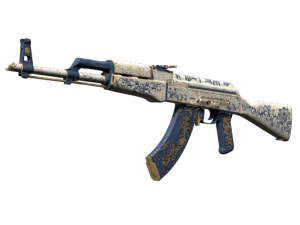
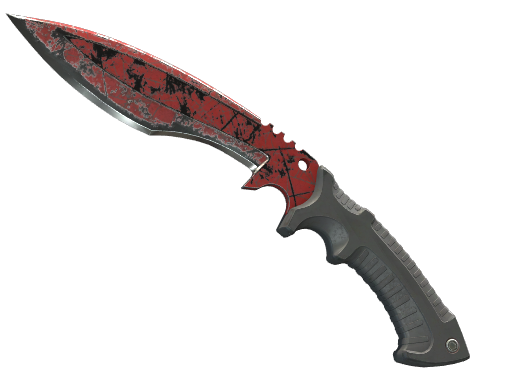
Counter-Strike 2's skin economy has a weird celebrity tier. Pattern rares sit at the top: a Tier-1 scar-pattern AK-47 Case Hardened, a clean Karambit Doppler Sapphire, a Crimson Web knife with three webs. Collectors post screenshots with appraisals in the tens of thousands, sometimes hundreds of thousands of dollars. They tag each other in trade threads and talk about these skins like paintings with hitboxes. It is easy to assume that kind of attention turns into sales. It usually does not.
The strange part is not that people disagree about prices. It is that some of the most expensive items in the game can go months or years without a real transaction. They get shown off, appraised, offered around, and then left in the same inventory. The public story says "grail." The private story is often "illiquid."
Part of this comes from how CS2 prices work. A Field-Tested AK-47 Redline or a vanilla knife has enough daily volume that you can look at recent sales and get a decent idea of what it is worth. A rare pattern does not get that benefit. A Factory New Case Hardened with pattern index #661 is not interchangeable with another Case Hardened. It is closer to a piece of art or a rare stamp. There are only so many copies, and each one has its own history.
That makes every valuation an argument. The seller points to the last recorded sale, maybe a Blue Gem from eighteen months ago. The buyer points out that the sale happened in CS:GO, before Source 2 changed the lighting and before the current market cooled off. One side says the skin has only gone up. The other says the trend has moved. With no central order book setting a daily clearing price, both people walk into the negotiation with anchors that barely overlap.
Then there is the theater around offers. In high-tier trading, reputation and perceived demand matter as much as cash. Sellers advertise big current offers, often shortened to C/Os, to make an item look hotter and to set a psychological floor. Some are real; plenty are friends helping a listing look active, or buyers who had no intention of paying once the seller actually said yes.
Bids are cheap when nobody has to honor them. A buyer can assemble a package of other rare, hard-to-sell skins, like high-float Kato 2014 crafts or niche Souvenir pieces, and call it a serious offer. But that can amount to swapping one liquidity problem for another. When the seller asks for liquid skins or crypto that can actually be moved, the buyer often goes quiet. The offer was less a purchase plan than a public display of inventory.
Sellers have their own incentives. For a lot of top collectors, a rare pattern is not just an asset. It is a badge. Owning a famous pattern index gets you recognition in private Discords and trading servers. Listing the item and taking offers becomes part of the social game. It brings attention and the occasional ego boost. Some sellers are not trying to exit. They are trying to be courted.
That is where "fuck you" buyouts come from. The price is set high enough that only a buyer with more money than sense would take it. It is not really a sale price. It is a filter. If the miracle buyer appears, great. If not, the skin stays put and keeps generating clout without the owner having to risk selling at the wrong time.
Even when a real buyer and a motivated seller find each other, the trade is a pain to execute. Steam's Community Market has balance limits that make it useless for deals this size. So people move to third-party marketplaces, peer-to-peer chats, crypto, bank transfers, or some awkward combination of all four. Each step adds friction.
The risks are not abstract. One side can vanish after receiving payment. Escrow can go wrong. Platform fees can eat thousands of dollars. Crypto can swing while the parties are still arguing over who pays the middleman. Valve's seven-day trade hold means everyone has time to get nervous. A deal can take days to arrange and then fall apart over a small price move or a new case announcement. Sometimes it is just buyer's remorse.
Source 2 has made this worse in a subtle way. The engine changed lighting, reflections, and color grading. Some patterns that looked incredible in CS:GO look different now. Deep blue Case Hardened finishes can read another way under dynamic light. Crimson Web layouts can look sharper or flatter depending on the setting. Doppler gems got a visual boost. Buyers worry that an older pattern will not carry the same status in the new engine. Sellers remember 2021 prices and do not want to admit that the mood has shifted.
So the high-tier pattern market ends up looking less like a stock exchange and more like a private museum with price tags. The big offers and screenshots keep circulating because they are fun to look at. But actual sales are rare. The mix of thin liquidity, offer theater, expensive logistics, and changing visuals keeps most of these deals stuck at the talking stage. When one closes, it is worth noticing. Most of the time, it does not close at all.
