
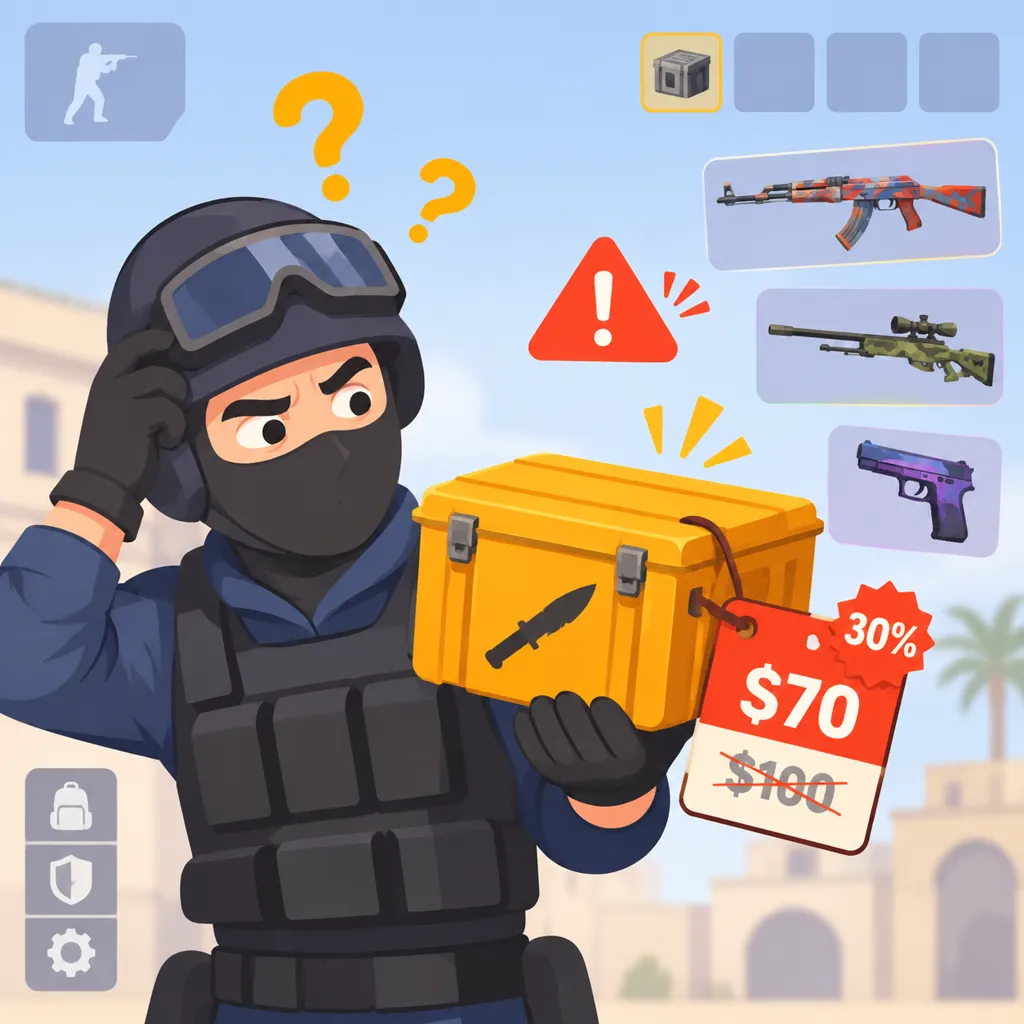
You list your prized CS2 skin on Steam Community Market, CS.Money, or Buff.163 expecting the kind of payout that matches the hype on your socials. Reality hits differently: the item sells for 30% less than your asking price, or sits there for weeks with no bites. And nowhere in the listing, the platform's fine print, or the forums does anyone warn you that this is basically a gamble. So here's why your CS2 skin tanks below the price, and why the warnings never show up.
The CS2 skin economy runs on pure speculation, not fundamentals. Unlike stocks or bonds, these virtual items have zero intrinsic value outside of what other players think is cool. Your $300 AWP Dragon Lore or whatever rare StatTrak gem you just picked up? Priced based on float rarity, wear condition, and a side of FOMO from the latest Major. The market is a ghost town most days. Liquidity is thin outside of peak hours, and one wrong move on the Steam client can send your item crashing 20-40% overnight. Platforms list prices as "suggested" rather than guaranteed, with no disclaimers about volatility. They just want that 15% fee on every trade.
Then there's the overpricing trap. Sellers love to slap on "1.00 float, factory new, blue gem" and ask for top dollar. But the crowd is fickle. What got hyped in a YouTube unboxing last week becomes yesterday's news when Valve drops a new case or issues a ban wave. Your skin might be priced at $500 because it matches your team's colors, but buyers in Russia or Brazil are flipping similar ones for $350. Nobody warns you because the algorithms on these platforms, whether Steam's matching engine or third-party bots on CS.Money, factor in average sale data, not your personal optimism. Cold math: if 100 similar skins sold last month for $400 average, listing yours at $500 just means it sits there.
Timing makes it worse. CS2 updates hit hard: new maps, weapon rebalances, Major tournaments that spike interest for a week and then evaporate. Case drops flood the market and tank values 10-30% in hours. Your skin was listed perfectly for a big event, the hype faded, and buyers moved on. Sellers rarely flag these risks in their listings, and the platform interface is all "Buy It Now" buttons and "Quick Sell" options. The sites prioritize speed and volume over education, and the gaming communities on Discord, Reddit, and Twitter are too busy posting clips to spell out "this could go to zero."
Understanding all this does help. Always check the 24-hour sales history on your platform, filter for similar items, and note where the price actually landed, not where sellers hoped it would. Factor in float values carefully: factory new looks premium, but a 0.15 float sometimes fetches more in certain niches. And go in knowing that nobody is obligated to warn you, because the transaction is automated and the platform gets its cut either way.
CS2 trading is a digital casino where the house always skims a little off the top. Trade smart, or at least expect the haircut.
